
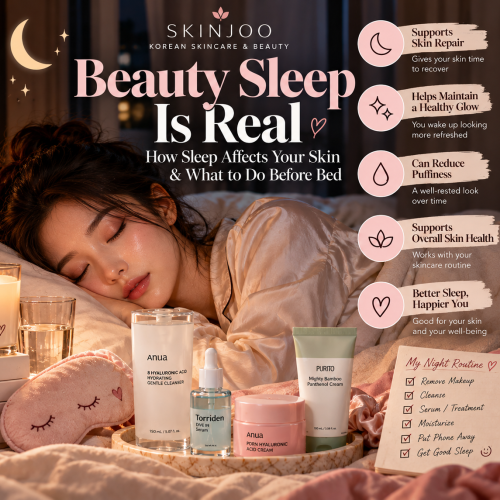
Beauty Sleep Is Real: How Sleep Affects Your Skin & What to Do Before Bed
You can have a great cleanser.
A beautiful serum collection.
A moisturizer that makes your skin feel amazing.
And still wake up looking like you haven’t slept in three days.
That’s because skincare isn’t the only thing that influences how your skin looks.
Your sleep, stress, hydration, environment and nighttime habits matter too.
While getting enough sleep isn’t a skincare treatment, healthy sleep habits are an important part of overall wellbeing — and they can influence how your skin looks and feels.
So let’s talk about beauty sleep.
Not another 10-step skincare routine.
Not another trending ingredient.
Just the relationship between your nighttime habits and your skin.
What Does “Beauty Sleep” Actually Mean?
“Beauty sleep” isn’t a magical number of hours that instantly gives you perfect skin.
It’s simply the idea that quality sleep and overall health can influence your appearance and how you feel.
During sleep, your body gets time away from the day’s activities.
You’re not:
- Applying makeup
- Touching your face
- Exposed to daytime pollution
- Sitting in the sun
- Sweating through a workout
- Constantly checking your phone
Your nighttime hours are therefore a natural opportunity to let your body rest.
And your skincare routine can fit into that period too.
What Happens to Your Skin When You Don’t Sleep Enough?
We’ve all had that morning.
You look in the mirror and think:
“Why do I look so tired?”
After poor sleep, you may notice that your face appears:
- More tired
- Dull
- Puffy
- Dry
- Less refreshed
- More visibly stressed
One bad night doesn’t permanently damage your skin.
But consistently poor sleep isn’t a habit worth ignoring.
Your overall health and wellbeing can influence how your skin looks, which is why skincare shouldn’t be viewed in isolation.
1. Tired Skin Can Look Duller
When you’re tired, your skin may simply look less fresh.
Instead of immediately reaching for another brightening serum, consider the basics:
Sleep + hydration + moisturizer + sunscreen
Sometimes the answer isn’t another product.
It’s better habits.
2. Your Under-Eye Area Can Look More Tired
The under-eye area is often one of the first places where tiredness becomes noticeable.
You may notice:
- Puffiness
- Darker-looking under-eyes
- A tired appearance
- More noticeable fine lines
An eye cream can provide hydration and become a pleasant part of your routine, but it can’t replace adequate sleep.
For example, Torriden Firming Eye Cream can be incorporated into an evening routine if eye-area care is one of your priorities.
Think of it as:
Sleep first. Eye care second.
3. Stress Can Show Up on Your Skin
Sleep and stress are closely connected.
When you’re constantly stressed, your skincare routine may become the last thing on your mind.
You might:
- Skip cleansing
- Forget moisturizer
- Pick at blemishes
- Sleep with makeup on
- Constantly change products
- Reach for harsh products because your skin suddenly looks different
Instead of fighting every skin change with another active, sometimes your routine needs to become simpler.
4. Your Nighttime Routine Shouldn’t Feel Like Homework
If your evening skincare takes 30 minutes, you might eventually stop doing it.
That’s why a realistic nighttime routine is better than an impressive one.
Your basic PM routine:
Cleanse → Treat → Moisturize
That’s it.
Everything else is optional.
5. Don’t Go to Bed With Makeup On
This one is simple.
If you’ve been wearing makeup throughout the day, remove it before sleeping.
Start with a makeup remover, cleansing oil or balm if needed, followed by your regular cleanser.
Then moisturize.
Your skin doesn’t need a complicated punishment routine afterward.
6. Your Phone Isn’t Helping Your Bedtime Routine
Let’s be honest.
You planned to sleep at 11.
Then you watched one Reel.
Then another.
Then you checked Instagram.
Then somehow it’s 12:47.
Sound familiar?
Your phone isn’t technically a skincare product, but your bedtime habits matter.
Try creating a short wind-down period before sleep.
Put your phone away.
Dim the lights.
Do your skincare.
Get into bed.
Your routine becomes a signal:
The day is over.
7. Don’t Turn Your Night Routine Into an Active-Ingredient Marathon
Late at night, it’s tempting to think:
“Since I’m awake, I’ll use everything.”
Vitamin C.
Acid toner.
Retinoid.
Exfoliating mask.
Peeling serum.
New ampoule.
No.
Your skin doesn’t need a chemistry experiment every night.
If you’re already using an active such as retinal or an exfoliant, follow its instructions and avoid stacking multiple irritating products just because it’s nighttime.
8. Your Pillowcase Gets More Attention Than It Deserves
You don’t need to obsessively change your pillowcase every few hours.
But regularly changing and washing bedding is a sensible hygiene habit.
If you’re prone to breakouts, also avoid going to bed with:
- Heavy makeup
- Excess product buildup
- Very sweaty skin
Clean skin + clean bedding + a simple routine is a much more useful combination than buying another serum.
9. Don’t Forget Hydration
If your skin feels dry or tight at night, hydration may need more attention.
A hydrating serum can be useful here.
For example:
Anua 8 Hyaluronic Acid Hydrating Gentle Cleanser
or a hydrating serum containing ingredients such as:
- Hyaluronic acid
- Glycerin
- Panthenol
- Ceramides
Follow with moisturizer to help keep your skin comfortable overnight.
10. Your Bedroom Environment Matters Too
Think beyond skincare.
Your sleeping environment can influence your comfort.
Consider:
🌡️ Temperature
A comfortable sleeping environment can make it easier to rest.
💧 Very Dry Air
If the air is extremely dry, your skin may feel drier too.
🛏️ Bedding
Keep your sheets and pillowcases clean.
💡 Lighting
A darker environment can help create a more sleep-friendly atmosphere.
📱 Screens
Give yourself some screen-free wind-down time if possible.
The 5-Minute “Beauty Sleep” Routine
You don’t need an elaborate nighttime ritual.
Try this:
Minute 1
Remove makeup and sunscreen.
Minute 2
Cleanse.
Minute 3
Apply your chosen serum or treatment.
Minute 4
Apply moisturizer.
Minute 5
Put the phone away and get ready for bed.
Done.
Your skincare routine doesn’t need to compete with your bedtime.
What If You Only Have 2 Minutes?
Even better.
Nighttime Emergency Routine
Cleanse → Moisturize → Sleep
Don’t skip your entire routine because you don’t have time for 10 steps.
The basics still count.
What NOT to Do Before Bed
❌ Sleep with makeup on
Remove it first.
❌ Try five new products
Nighttime isn’t the best moment for skincare experimentation.
❌ Pick your skin
Hands off.
❌ Over-exfoliate
More exfoliation doesn’t equal better skin.
❌ Keep scrolling until 2 AM
Your skincare routine can’t compensate for consistently poor sleep habits.
❌ Use extremely hot water
It can leave some people’s skin feeling dry and uncomfortable.
Can Skincare Replace Sleep?
Absolutely not.
A serum can’t replace rest.
An eye cream can’t replace rest.
A face mask can’t replace rest.
And no amount of Korean skincare can turn five hours of sleep into eight.
Skincare can support your skin.
Sleep supports your whole body.
That’s the bigger picture.
The Ultimate Beauty Sleep Formula
Forget the complicated routine.
Think:
💤 REST
Prioritize a consistent sleep schedule.
🧼 CLEAN
Remove makeup and daily buildup.
💧 HYDRATE
Use moisturizer and hydrating products if needed.
🌙 SIMPLIFY
Don’t overload your skin with actives.
📵 UNPLUG
Give yourself some time away from screens before bed.
🧴 PROTECT
Wear sunscreen the next morning.
Your 7-Day Beauty Sleep Challenge
Try this for one week.
Every night:
☐ Remove makeup
☐ Cleanse
☐ Moisturize
☐ Put your phone away earlier
☐ Keep your bedroom comfortable
☐ Get into bed at a consistent time
Every morning:
☐ Drink water
☐ Follow your morning skincare routine
☐ Apply sunscreen
Don’t expect a dramatic transformation after seven days.
Instead, pay attention to how you feel, how rested you are and how comfortable your skin feels.
The Real Secret Behind “Glow”
We spend so much time looking for the next skincare product that we sometimes forget the boring stuff.
Sleep.
Water.
Food.
Movement.
Sun protection.
Stress management.
Consistency.
Your skincare shelf is only one part of the picture.
And sometimes the most underrated beauty product is simply:
A good night’s sleep.
Final Thoughts
Beauty sleep isn’t a miracle treatment.
It’s a reminder that healthy-looking skin isn’t created only inside a skincare bottle.
Build a simple nighttime routine.
Remove your makeup.
Moisturize.
Don’t overload your skin with actives.
Put the phone away.
And most importantly, give yourself time to rest.
Because your nighttime routine shouldn’t end with another hour of scrolling.
It should end with:
Skincare done. Phone down. Lights off. Good night. 🌙
FAQs
Does lack of sleep affect your skin?
Poor sleep can be associated with a tired, dull or less refreshed appearance. Consistently getting enough sleep is an important part of overall health and wellbeing.
Can sleep improve your skin?
Healthy sleep habits can support overall wellbeing, which can contribute to how rested and healthy your skin appears.
What should I apply before bed?
Keep it simple: cleanse, apply a suitable treatment if needed, and moisturise.
Do I need an eye cream?
No. Eye cream is optional. A good moisturiser and overall skincare routine can be enough for many people.
Can skincare replace sleep?
No. Skincare can support your skin, but it cannot replace adequate rest.
Should I use active ingredients every night?
Not necessarily. The frequency depends on the ingredient and product. Follow product directions and give your skin time to adjust.